
Finish Strong: The Low-Carb Fuel Switch - What to eat when not running
We start with the major nutrients: carbohydrates, fat and protein. Protein is structural, not a good caloric source. That leaves us with carbohydrates and fat for energy.
The fundamental rule that applies to that is that fat supplies 9 calories per gram, and carbs supply 4 calories per gram.
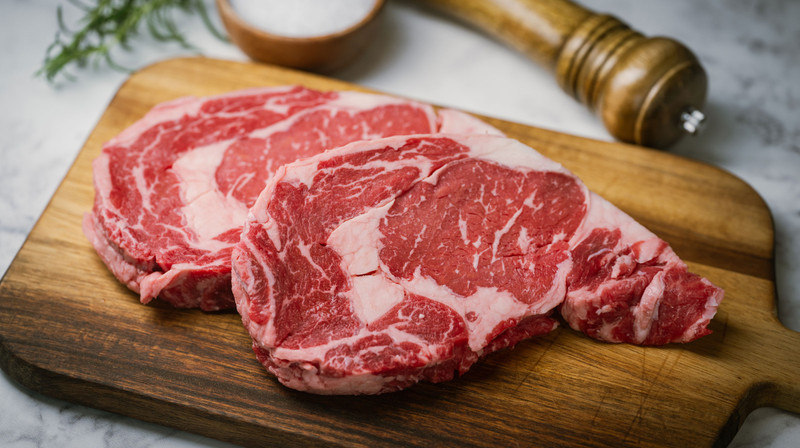
You’ve heard that eating fat is bad for you. Let’s address that immediately. If you are eating the Standard American Diet – roughly 20% calories from protein, 40% from fat, and 40% from carbs, then I would agree. That mix of calories is a major problem. The health records tell the sobering story. The truth is that when you have a diet of 20% from protein (same as SAD), but a few percent from carbohydrate and about 80% from fat you have a very different context for your body. All the “rules” that you heard before on diet don’t hold any more. For example, people told me to trim off all the fat from a piece of meat because it was bad for me. On the SAD diet, that had some merit, but when you train for energy from fat, throwing away the energy source is not rational. Talking numbers may be confusing. Let’s look at a steak that has 20% calories from protein, and 80% calories from fat. It is called a rib-eye steak.
With the 9 calories per gram of fat, and 4 calories per gram of protein, the energy density of the fat is more than 2 times the carb energy density. If you only look at numbers, you might say that you can’t eat that much fat, but when you see what it actually looks like, it becomes simpler to understand. Now, you don’t have to eat rib eye steak to get ready to run on fat energy. Meat, fowl, fish, eggs, and dairy can all supply plenty of fat.
With the 9 calories per gram of fat, and 4 calories per gram of protein, the energy density of the fat is more than 2 times the carb energy density.
The problem is not getting the fat input, the problem is that almost everybody in the USA is addicted to eating carbohydrate. That addiction problem is the hardest part of switching your energy input to fat. You just don’t switch over in one day and go from there. I tried that and it didn’t work. Again, as with all training, you must adjust slowly to give your body a chance to make the chemical changes that work for fat digestion.
The tests of running on fat decades ago didn’t work because people didn’t take time to adjust. Thus, fat looked weak, and carb loading took over.
I want to be up-front about this so you know how to do this switch. Sudden change will not work. Your body needs time to supply the chemicals to extract the fat calories.
So what works?
Every day you remove some carbohydrate calories and eat more fatty food. Over a month of that, you will get way down on the carb input, but you may not be over the addiction. Gradually, eat fewer carbs, and eat more fat. After a few weeks your body will be able to burn fat more readily. With that, you can push the carbs intake down to 20 to 30 grams per day ( 80 to 120 calories ). Then there will be a day when you don’t crave carbs and can chose to eat something else. That’s when you know that the addiction is broken. Just keep the carb input low so that you don’t slip back in the addiction mode. As time goes on, your body will get used to burning fat and the addiction will be over.
Keep total calories the same. Cut back carbs, but add fat to compensate. If you don’t adjust both, it will be difficult to switch because you will be short of energy. Butter is your friend to survive these days. Try a thin cracker spread with butter.
If you go to a party where there is nothing but sugar, eat very low sugar the day before, and then go back to very lower sugar the days after the party. Your body is smart enough to stick to low carb even if there is a sugary day once in a while. Three or four days of high carbs will put you back in the addiction mode.
In the next section, we will look at practical details to make this transition easier.
We will look at electrolytes later, but there’s a key point you need to know now. On a high-carb diet, you generate a lot of insulin to store the carbs. That insulin causes the body to retain salt. When you reduce your carb intake, that excess sodium is now free to leave, and you go to the bathroom more. That is completely natural. All you need to do is put more salt on your food ( to your taste ). There’s no magic in any of this – we are working with the body naturally.
Balance fat intake to the protein input
Suppose you want to have 2,000 calories/day with 20% of the Calories from protein, and 80% of the calories from fat. Using 9 calories per gram of fat, and 4 calories per gram of carbohydrate, the weight of fat/weight of carbs = 1.78. That’s what you see in the steak picture above.
What this means is that when you have protein, you also need to have some fat along with it. The rib eye steak is fine as is with all the fat attached, but what if you are eating chicken with no fat attached? You need to add a sauce with fat in it. That’s why you see French recipes for fish or chicken in cream sauce. The sauce is providing the extra fat to balance the low-fat meat. The French weren’t running ultras, they just knew what felt good.
Note: if you don’t add the fat, your body will digest your own body fat to supply the difference. That’s ok for a while, but eventually you run out of fat to supply. So, don’t eat just protein, have some fat with it.
Should you eat vegetables?
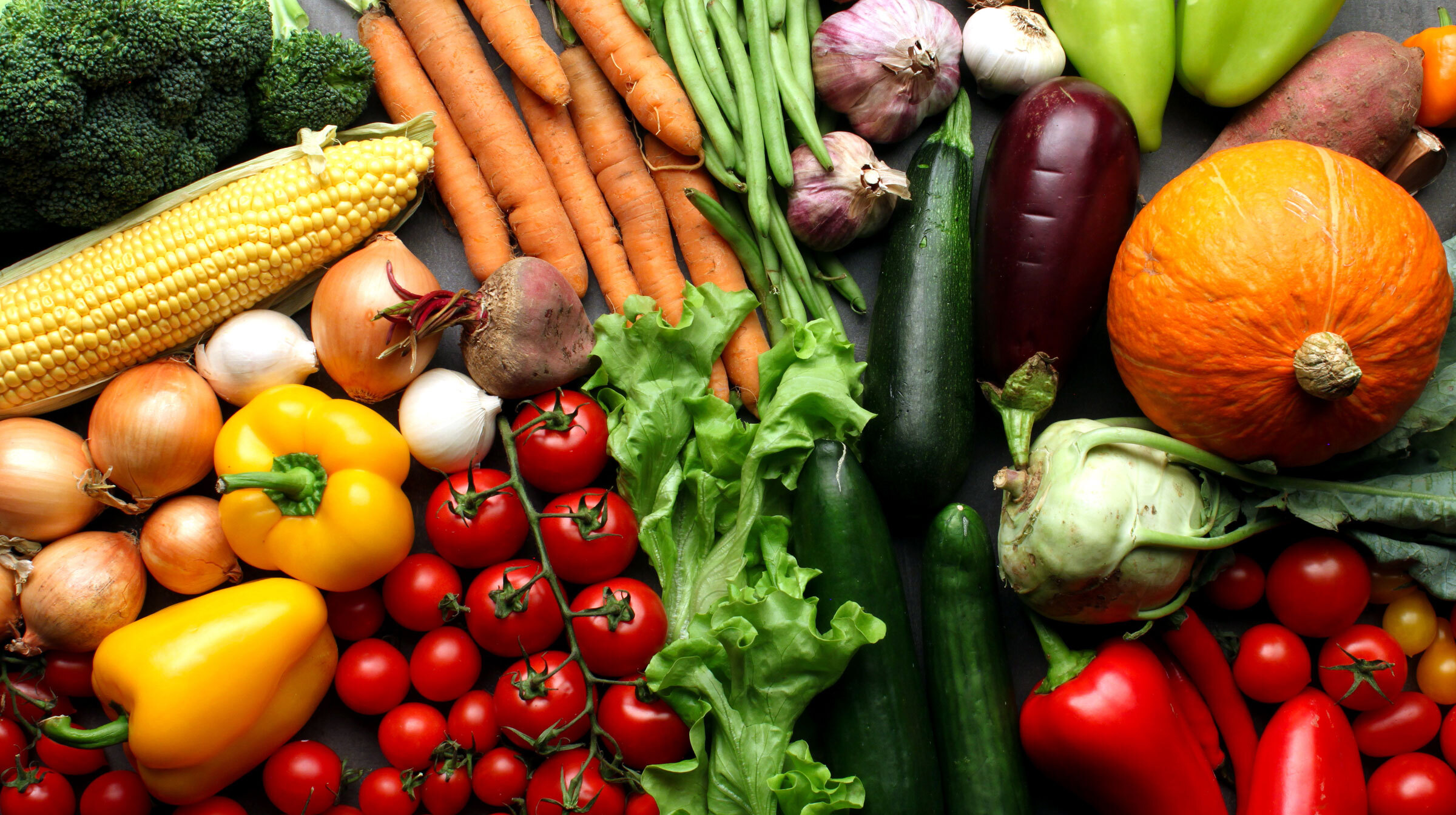
There’s a lot of debate on this topic, with many views. Rather than talk it to death, think back to how our ancestors faced this. In the Winter, they had few vegetables and just ate to stay alive. The body saw different foods and adapted to them. Our digestive tracts are highly competent. So, my view of this is to eat small amounts of various vegetables – whatever you like. One thing I have good luck eating is gluten-free oats, ( 2 tablespoons, in 1/4 of a cup of water ), microwaved, at breakfast. That’s a grain but it digests easily like a vegetable.
Saturated fat
For decades, people have said “saturated fat is bad for you.” Here is a case where people don’t understand the context. Problems attributed to saturated fat almost always occur in the presence of high carbohydrate intake. If you are on the SAD diet, and you eat a lot of carbs, AND a lot of saturated fat, it WILL be bad for you. Your body hardly knows what to do with gross fat overload and a carbohydrate load. If you have low carbohydrate, you can eat saturated fat, such as butter or animal fat. Low carb is a different context than SAD.
Eat a variety of fats: saturated, monosaturated and omega 6, uncooked (Tahini, for example). If you have a variety of fats, your body will handle it all fine.
Seasonal
There is a seasonal content to this. In Summer carbs are prevalent. In Winter, carbs are mostly gone. So, people needed to store the Summer’s food as fat, and burn that fat in the Winter. It is that simple. Our current society has lost its way from the seasonal context. We don’t cycle foods with the seasons, we eat carbs all the time. That leads to powerful addiction to carbs. This isn’t a failure of willpower; it’s a normal hormonal response to constant carbohydrate availability. That addiction needs to be broken for a low-carb system to work.
Lean protein for initial weight loss
If you eat low carb to lose weight, then you address the fat to protein ratio differently. There are two different low-carb states: one for weight loss (lower fat intake so the body burns its own stores), and one for maintenance and performance (adequate dietary fat to meet energy needs). When I went low carb, my weight had gone up from 142 pounds to 165 pounds. I needed not only to get away from carbs, but I also had to burn off that extra fat.
If you have high insulin, you can’t burn off the fat, and then you don’t lose weight. So, not only did I shut off the sugar, I also had to shut off the fat intake so that my body would burn the body fat for energy. For meat, I would eat 93% protein meat, with vegetables on the side. The insulin dropped and my body burned internal fat calories. I went from 165 pounds to 137 pounds in 3 months. I did not take any diet pills. My weight loss was all from what I ate/or didn’t eat. My weight has stayed stable and then I went back to eating meat with fat attached. I’ve been at 137 pounds for over three years. Pills are not needed if you eat the right stuff.
If you have high insulin, you can’t burn off the fat, and then you don’t lose weight.
If you are cooking, note that if you eat a “fast” animal like a chicken or a fish, you need to add a lot of fat with it. If you eat slow animals like a cow or a pig, they come with fat and you don’t need to add more fat. If you are served a “fast” animal with no fat, add some butter.
Your general choices are meat/fish/fowl, vegetables, and seasonings. You can also eat dairy products, cheese, yogurt ( watch out for sugar ), and kefir. Fruits low in sugar can be added.
There isn’t room here for a cookbook, so you’ll just have to find the foods that work for you. Later I’ll add a recipe to demonstrate the type of cooking that works. There are many ways to cook, so you can adapt your favorite foods to low carb. If you like French food, you are lucky because French dishes can easily be made low-carb. You can do the same thing with Chinese food, but you must stay away from rice and noodles. Their other foods have good meat and vegetable combinations. You can also do Italian cooking but the pasta must be reduced substantially. But the meat, vegetables and olive oil are excellent.
Stay far away from processed food. Cook your food from fresh ingredients, with little or no processing. Later I can add a chicken soup recipe for illustration of the principles.
Consider life long, long ago. If you are being chased by lion, you need energy fast – that’s where carbohydrates excel. They are meant to get you to safety fast before you are eaten. If you want to hunt all day for food, you need a day-long supply of energy. That’s where fats excel. In terms of energy storage, you need energy fast, so the carbs for that are stored in the muscle areas. But you can’t store much energy there. If you need energy for hunting all day, it can be stored in other areas. And if it is stored as fat, you can store energy for a days-worth of hunting. These facts were in place in pre-historic times. Since those times people have had the ability to store carbs and fat for energy. The biochemistry to do that has been in place before people had language.

Adaptation
I remember when I moved from Wisconsin to Colorado. My elevation went from 600 feet to 5,000 feet. I had to let my body get used to operating at high altitude. It took a week to get over the hardest part, but it took another month to complete the adjustment. The body needed to make chemical adjustments and it took time. It is the same type of reaction that you need to get over carb addiction. Don’t try to change everything at once. It won’t work because you don’t have the adjustments made just by mentally deciding. What works is to start reducing your carb input every day, little by little. During that time, the body will respond by changing chemistry to derive more energy from fat. As carbs go down, fat input must go up to provide the total energy needed.
In a low carb diet, the split is 20% for protein, 75% for fat and 5% for carbohydrate. Note that the protein part is the same. That reflects that protein is a structural need, not a calorie source. We just express it as calories to keep life simple. The key point is that a low-carb mode keeps the carb part very low. That will bring your insulin much lower, and you will be healthier, and readily able to burn fat.
Let’s be clear about what this is telling us: we are not flooding our body with sugar, fructose, starch or maltodextrin. Lower carbs will keep our insulin levels at reasonable values, avoiding long-term problems. We should be able to run for many more years on a low carb program.
Salt
We will have much more to say about this in the Electrolytes section. Let me summarize here that the salt you should use is MORTON LITE Salt, which you can buy in most large grocery stores, or on-line. Empty your salt shaker and re-fill it with LITE SALT.
Now, what do you eat and drink when you are running?
If you have questions or comments, please send them to:
Please pass the links here on to your friends so that they can see what this is about.
Next: Electrolytes
Read NextStart From The Beginning
Finish Strong: The Low-Carb Fuel Switch — Fuel Introduction
Read First Article