
Finish Strong: The Low-Carb Fuel Switch - Pacing and adaption details
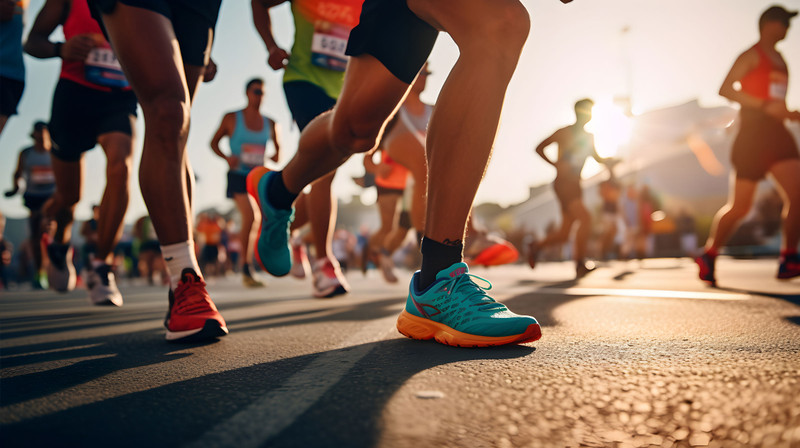
The time when you are getting used to running on fat is a great time to adjust the details of your training and pace.
Most races begin with eager runners blasting off with all their stored energy — and then get depleted and finish slowly.
We’ve been through that, and know the slow finish. When you are transferring to low-carb running, it is a perfect time to adjust pacing for better performance. Nick Coury recently ran a 24-hour race with a record distance of 173 miles. He did that by running a controlled pace, not blasting off, but setting an east pace.
I ran my 50K Personal Record at the Afton 50K race in Minnesota, at age 53. I ran an even pace for the distance. The race has two loops. I ran the first one at easy pace and noticed that if I could duplicate that on the second loop, I’d have a PR. That sounds easy but the last 10% of the race was really tough. How do you run at even pace? You avoid going out to fast. You run like it is a training run. It seems too easy, but it will get more difficult at the end. But the easy start makes for a stronger finish at the end.
Now, if you are running on fat, you need to get that system working well so you avoid a fast start and just roll along at an even pace. I asked Tom Bunk how to run an ultra. He said, “Find a pace you like, and stick with it.” There’s a ton of wisdom in that simple answer.
Find a pace you like, and stick with it.
Every time you go run, start relaxed so that your body temperature and blood flow establish themselves. If you are racing, know where the aid stations are and plot your arrival time according to the pace you like. Run and see how well you hit your scheduled times. Doing this gives you a pace guide. This is an area where practice helps. Get a feel for what your target pace feels like.
Your training on low carb is for a good, relaxed pace. Early on, your pace maybe slow because you don’t have the biochemistry set up yet. Regular training will help that, so have patience. As your body gets used to burning fat, the pacing will be better. These adjustments take time to develop.
As you get used to running on fat, notice that you aren’t craving sugar. This is a blessing. I’ve seen so many people who have a hard time eating tons of carbohydrates on the run. By the end of run, they are sick to their stomach and can hardly take in anything. As the old saying goes, “I felt great after I threw up.” When you run with fat, that ugly state doesn’t happen.
As noted earlier, at the end of a long run your brain is craving a SMALL amount of carbs to keep going and avoid exhaustion. Experiment with that on your training runs to see the amount of carbs that works for you. This is a case where major energy is provided by burning fat, and brain function is enhanced by a small amount of carb.

You will be slower for a while until you get adapted. That might take 2 to 3 months. For some people it’s faster, for others slower — but it always takes longer than a weekend.
When your body has made the change, then you can run faster without thinking about it.
I also note that when I lost 27 pounds from running low-carb, I was much more agile on a trail and felt very confident in my footing. Running on low-carb brings a number of side benefits that may surprise you. What we are trying to do here is go through a program of changes that add up to real progress. This isn’t just one thing, this is the addition of many benefits giving more than you expected.
Fat-adapted pacing rewards restraint early and punishes impatience — but it pays that discipline back with interest in the final third of a race.
Train relaxed and let the improvements come. “Find a pace you like, and stick with it.”
Holy smokes….incredible finish at LA Marathon today by American Nathan Martin coming from behind to catch and beat Kenyan Michael Kamari at the finish line.
One runner finishes on fat, and wins. The other runner finishes on carbs and loses.
Now, how your recovery works on low-carb?
If you have questions or comments, please send them to:
Please pass the links here on to your friends so that they can see what this is about.
Next: Recovery
Read NextStart From The Beginning
Finish Strong: The Low-Carb Fuel Switch — Fuel Introduction
Read First Article